[shared_counts]
The Importance of Specialized Trailers for Safe Livestock Transport in Alberta
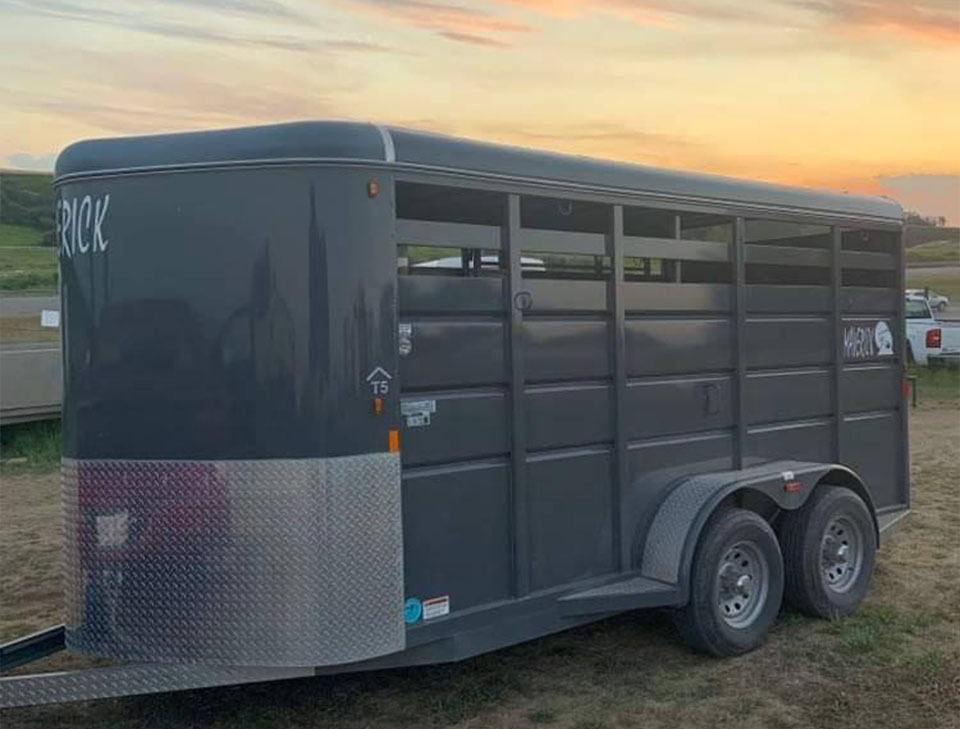
With live cargo, it is always more difficult than with boxes or goods. Noise, the road, temperature, and lack of space scare animals, so the design of the trailer decides everything. For farm holdings in Calgary, Airdrie, Chestermere, Okotoks, and other communities of Southern Alberta, specialized trailers are needed regularly — to safely transport horses and livestock to a new location, a market, or for a scheduled examination. For such tasks, Horse & Livestock Trailers are designed — with ventilation, a safe floor, sufficient internal space, and the possibility of installing partitions. At the same time, not only the characteristics of the trailer itself are important, but also the preparation of the animals, the condition of the equipment, proper loading, and compliance with humane transportation requirements.
Why Standard Transport Fails for Livestock
Animals inside a trailer behave completely differently than objects. A box can move a little on turns, but it will not suffer. But an animal will constantly step over, turn around, scratch, shift during acceleration, and resist during braking. If the coating is slippery and the space is too large to fall, this will most likely lead to injury. If the space is too limited, this can cause stress, lack of air, panic — and the animal will also reach its destination not in the best condition.
Therefore, for safe cattle hauling Southern Alberta, specialized equipment is needed. Often a problem arises due to the absence of partitions, because animals are different in size or temperament and they are cramped together. The internal dividers and ventilation system helps, which separates the herd, limits excessive overcrowding, and clearly controls air circulation. High walls, high-quality flooring, and protection from bad weather also remain critically important.
Ventilation and Climate Control Concerns
Fresh air inside the trailer and the absence of excessive stuffiness is something that needs to be monitored constantly. In summer it gets hot there in a matter of minutes, especially during long trips. In winter, too, everything cannot be closed tightly: air must circulate, despite the cold outside.
The requirements of CFIA humane transport regulations involve considering ventilation along with weather, trip duration, and the condition of the animals. Therefore, before leaving, it is important to evaluate not only the operation of the ventilation openings, but also the conditions of the specific trip.
Stress Reduction and Physical Safety Features
The causes of stress on the road are simple: noise, vibration, swaying of the trailer, unfamiliar smells, and other animals. A simple calm approach and smooth loading of the herd help to soften this.
Special attention should be paid to the floor and bedding. The animal must have a reliable foothold without unnecessary risk of slipping, and the bedding must correspond to the conditions of the specific transport. The condition of the floor, partitions, doors, and other elements of the trailer should be checked even before loading.
Key Benefits of Using Dedicated Livestock Trailers
Special trailers have come a long way of improvement to make it as convenient and safe as possible to transport live cargo — with all its characteristics and needs. No retrofitting is required — these structures are maximally ready for you to choose a model for the number of animals, lead them inside, and set off even over significant distances.
And it is convenient precisely to rent such special trailers, because you can order transport for one horse, for two, and even for a larger number of animals, and in any case you can choose the optimal size option. All maintenance and thorough cleaning are also under the responsibility of the landlord. You simply take the trailer for the period that is needed, and get only benefits — without inconvenience and hassle.
Regulatory Compliance in Alberta (CFIA Standards)
In Canada, requirements for humane transportation cover not only the condition of the trailer itself. Before the trip, it is necessary to assess the condition of the animals, provide enough space, proper ventilation, and a safe foothold, as well as take into account the route duration and weather conditions.
Therefore, livestock transport regulations Alberta should be taken into account as early as the trip preparation stage. Even a compliant trailer does not replace proper loading, placement, and handling of animals throughout the route.
Disease Prevention and Biosecurity Measures
When one trailer constantly commutes between different farms, Biosecurity and trailer sanitization become the main priority. Special transport is designed to be easily and properly washed, and it is always thoroughly cleaned after each use. If the floor, walls, partitions, and all other surfaces are qualitatively cleaned, you do not have to worry about bringing any disease pathogens to the farm.
Smooth Loading with Specialized Ramps and Dividers
Loading an animal can sometimes be difficult, especially if it is afraid to go inside or slips on the ramp. But when the surface is reliable and the passage is made safe, this stage passes much more calmly, without unnecessary nerves and pressure on the livestock.
Special Trailer ramps and rubber mats just help animals not to slip when they enter inside. And after boarding, internal partitions give the opportunity to conveniently break up the space for the number and type of animals, so that they do not crowd and run around the body during movement.
Choosing the Right Trailer for Your Herd
It is impossible to say which specific model will be better for transporting animals in general: because you need to take into account the number of heads, the specific species, approximate weight, and also — the route — how difficult the transportation conditions will be and on which highways. If you are moving animals between farms, this will be a different trailer than for taking a single one to a nearby veterinarian, or to an auction in a neighboring province.
No less important is to check the capabilities of the towing vehicle in advance. The trailer must correspond to its permissible towing load, and the hitch type — to the specific car. Therefore, before renting, it is worth matching the characteristics of the trailer with the parameters of your pickup or other towing vehicle.
Weight Capacities and Towing Requirements (GVWR)
Before renting a trailer, it is mandatory to compare two important indicators that, although related, are responsible for different things: Towing capacity & GVWR. The concept of Towing capacity determines how many kilograms your car can safely pull, while GVWR is the maximum allowable weight of the trailer itself along with animals, straw, and all cargo.
If you overload the transport, it immediately hits the brakes, handling, and overall stability on the road. That is why the capabilities of your car and the trailer itself need to be checked in advance, and not look only at how big it is on the outside.
Gooseneck vs. Bumper Pull Trailers for Farm Animals
When it comes to Bumper pull vs gooseneck livestock, two completely different ways of attaching the trailer to the towing vehicle are meant. The first, Bumper pull, attaches behind the car, and the second, gooseneck, goes into the bed of a pickup truck. When choosing equipment for rent, this is the main point, because a regular car will far from pull everything.
Therefore, it is first advised to look at the hitch type of your car and find out its towing capabilities. As soon as this is clear, you can look closely at horse and livestock trailers of the corresponding format. When planning a trip, simply state these characteristics when renting — and they will immediately select what really suits your car.
Essential Checklist Before Towing Livestock in Calgary & Surrounding Basins
As practice shows, the final check of how ready the trailer is for the road takes up to 10 minutes — but significantly reduces the risks that something will go wrong on the way. Here is what definitely needs attention:
- Tires must be serviceable and have proper pressure, and lighting, brakes, and hitch device — work flawlessly.
- All partitions, doors, locks, and ventilation openings must be fully serviceable.
- The ramp must be securely fixed, and its surface — provide animals with a safe grip during entry.
- Before boarding, the general condition of the animals should be assessed and those who, due to health, cannot safely endure the road should not be transported.
- It is worth taking into account the weather forecast, road conditions, possible delays, and total travel time in advance.
- The amount of bedding must correspond to the duration of the trip and weather conditions. For long routes, it is necessary to plan time for water, feed, and rest for the animals in advance.
Such a checklist helps to check the main conditions even before moving off. For a short local trip, it takes only a few minutes, but allows you to notice a problem in time that is much harder to fix on the road.
Reliable Livestock Trailer Rentals in Calgary with Hetman Rental
Not every farm needs its own trailer. If transportation occurs only a few times a season, buying and storing equipment can be an unjustified expense. In such cases, livestock trailer rental Calgary allows taking the needed transport precisely for the period when it is necessary.
Rental is suitable for seasonal work, one-time transportations, trips to the market, or veterinary examinations. There is no need to constantly store the trailer or adapt a universal model to tasks for which it is not intended.
Hetman Rental offers livestock trailer service in Calgary, Southern Alberta, and surrounding areas. If you need a trailer for transporting horses or livestock, tell us who exactly and where needs to be transported, as well as inform the characteristics of the towing vehicle. We will help select the appropriate option, advise on configuration, and agree on rental details for a specific trip.